

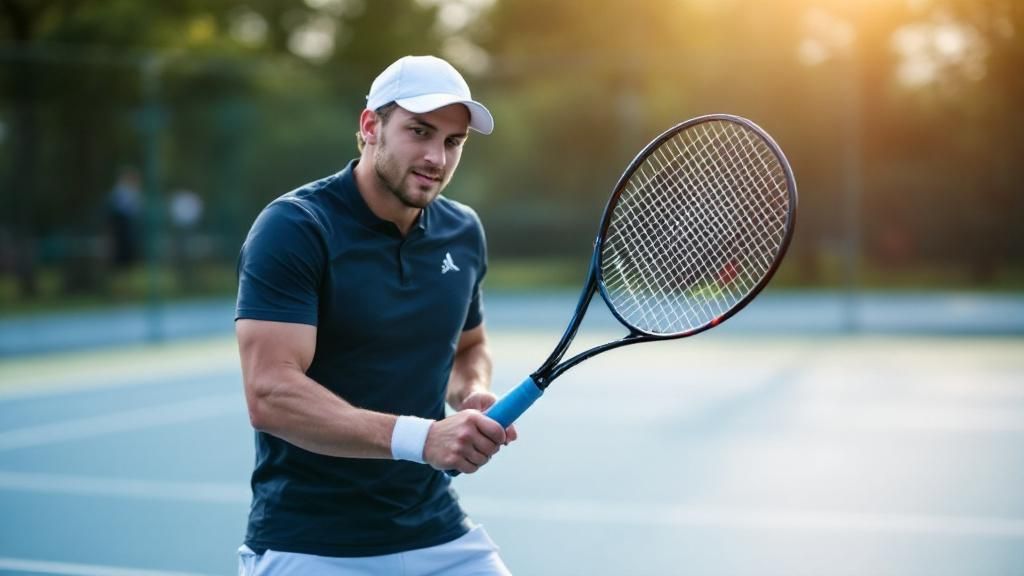
In a pioneering move to foster the next generation of tennis talent, a top-tier British Tennis Academy has launched a cutting-edge training scheme created for young aspiring champions. Integrating state-of-the-art performance science, personalised coaching methodologies, and sports psychology frameworks, this innovative approach promises to transform how developing athletes are cultivated. This article explores the principal components of the initiative, its likely influence on British tennis, and how it seeks to develop world-class competitors possessing the skills and resilience required to perform at the top echelon of the sport.
Innovative Educational Framework
The British Tennis Academy’s innovative training programme exemplifies a fundamental change in how young players are cultivated. Rather than depending exclusively on traditional coaching methods, the academy has implemented a integrated system that combines research-backed insights with real-world match practice. This methodology acknowledges that champions need more than playing ability; they must develop emotional fortitude, fitness development, and game intelligence. The programme adapts each athlete’s progression route based on comprehensive assessments of their capabilities, limitations, and prospects, ensuring personalised attention throughout their development.
At the heart of this revolutionary approach is the focus on long-term athlete development rather than immediate competitive outcomes. Coaches collaborate with sports scientists, nutritionists, and psychologists to create customised training programmes that evolve as players advance. The academy maintains this integrated methodology reduces injury risk whilst optimising performance improvements. By focusing on long-term development strategies, the programme equips young players with versatile abilities that translate effectively across different playing surfaces, opponents, and competitive environments, ultimately building the mental toughness needed for elite-level tennis.
State-of-the-Art Technology Integration
Modern technology serves as a key component in the academy’s training programme, offering unprecedented understanding into player capabilities and progression. Advanced capture systems assess every element of a player’s technique, detecting subtle modifications that can enhance efficiency and power. Real-time vital sign monitoring records cardiovascular variation, muscle activation patterns, and tiredness indicators during coaching sessions, permitting coaches to refine training load and recovery programmes. This objective-focused strategy guarantees that training decisions are based on measurable data rather than intuition and observation.
The academy leverages artificial intelligence and machine learning algorithms to forecast injury likelihood and identify optimal training windows for skill acquisition. Players gain benefits from VR-based simulations that replicate demanding game situations, allowing them to develop tactical awareness and decision-making skills in controlled environments. Additionally, comprehensive video analysis systems facilitate thorough comparison of player techniques against professional benchmarks. These technological advancements collectively create an setting where young athletes receive immediate, actionable feedback that speeds up their development and enhances their competitive capacity.
- Motion-capture systems analyse technique with sub-millimetre precision and accuracy
- Biometric sensors monitor heart rate, muscle activation, and tiredness levels continuously
- Artificial intelligence identifies injury risks and optimises training schedules effectively
- Virtual reality simulations recreate game scenarios for strategic improvement purposes
- Advanced video analysis benchmarks player techniques against professional international standards
Comprehensive Player Development Strategy
The British Tennis Academy’s forward-thinking development scheme adopts a thorough approach that transcends traditional court-based instruction. This holistic approach understands that professional-standard tennis demands the synthesis of physical conditioning, skilled execution, tactical acumen, and psychological fortitude. By addressing each dimension of athlete progression at the same time, the academy fosters an setting in which junior competitors can develop fully and construct enduring structures for ongoing excellence at top-tier play.
Central to this philosophy is the conviction that developing complete athletes requires nurturing their individual character and personal growth alongside sporting excellence. The academy’s coaching staff collaborate closely with sports psychologists, nutritionists, strength and conditioning specialists, and lifestyle advisors to ensure each young player receives bespoke guidance. This multidisciplinary team approach guarantees that nothing in a player’s development is overlooked, enabling the academy to recognise and nurture future champions who possess both exceptional talent and exceptional character.
Emotional Resilience and Emotional Wellbeing Support
Recognising that mental toughness often sets apart champions from contenders, the academy has established a specialist mental health initiative. This thorough initiative addresses managing stress, developing confidence, and managing emotions, equipping young players with key tools for intense competitive settings. Experienced mental health professionals provide individual support to athletes to develop tailored approaches that improve mental focus, mental toughness, and reliability throughout their sporting careers.
The psychological assistance structure blends smoothly with regular practice timetables, ensuring that mental development receives the same emphasis alongside physical conditioning. Players take part in regular sessions covering mental imagery methods, objective-setting approaches, and challenge-handling techniques. This forward-thinking method fosters psychological maturity and emotional intelligence, allowing young athletes to manage the unavoidable obstacles and setbacks inherent in professional tennis with increased self-assurance and composure.
- Customised psychological support sessions tailored to player needs and goals.
- Anxiety reduction methods such as mindfulness and breathing exercises on a regular basis.
- Confidence development via constructive feedback and progress tracking mechanisms.
- Resilience development focused on overcoming setbacks and preserving mental control.
- Family counselling services guaranteeing holistic wellbeing and family environment balance.
Expert Coaching and Mentorship
The Academy’s commitment to coaching excellence forms the cornerstone of its innovative training programme. By recruiting seasoned experts with demonstrated success at international level, the institution guarantees that emerging talent receive guidance from professionals with knowledge of the requirements of professional tennis. This commitment to expert instruction establishes a setting where aspiring champions can refine their playing ability whilst cultivating the mental strength required for winning performances at the highest echelons of the sport.
Mentorship transcends technical coaching, encompassing holistic player development. Coaches partner with athletes to cultivate psychological strength, strategic acumen, and emotional intelligence. This holistic method understands that elite tennis athletes demand more than superior stroke mechanics; they must possess mental fortitude and match intelligence. The Academy’s mentors function as mentors, imparting their knowledge and assisting junior competitors in navigating the challenges inherent in elite competition whilst maintaining balanced, fulfilling lives away from matches.
Elite Coaching Personnel
The Academy has assembled an outstanding team of coaches, each bringing expert knowledge to the programme. These practitioners possess extensive experience competing at Grand Slam events and global tournaments, providing invaluable insights into high-level competition. Their combined expertise encompasses technical advancement, athletic conditioning, mental training, and tactical approaches. By integrating different methodologies and methodologies, the coaching team creates a comprehensive training setting that exposes young players to different viewpoints and approaches within professional tennis training.
Ongoing professional growth remains fundamental to the coaching team’s dedication to high performance. Staff members frequently participate in international coaching seminars, contribute to joint research projects, and engage with sports science experts. This ongoing learning guarantees the Academy stays at the forefront of tennis coaching innovation. The coaches consistently communicate best practices, offer constructive critique of approaches, and jointly assess player progress. Such collective excellence fosters a dynamic, evolving coaching culture that benefits all academy members and enhances ongoing competitive edge.
- Previous Grand Slam champions with extensive international playing experience
- Specialists in athletic fitness and injury management approaches
- Psychological professionals specialising in sports psychology and resilience building
- Technical analysts employing cutting-edge video technology and statistical performance data
- Strength and conditioning experts with specialisation in athletic training
Future Outlook and Performance Metrics
The Academy’s cutting-edge programme establishes British tennis competitively for ongoing international excellence over the future decades. By implementing evidence-based training systems and fostering a culture of constant advancement, the institution seeks to produce a consistent pipeline of world-class competitors capable of performing in Grand Slam tournaments and Olympic Games. Preliminary evidence suggest the approach appeals widely with young players and their families, creating significant interest from aspiring athletes across the United Kingdom.
Looking ahead, the Academy intends to broaden its reach through regional partnerships and satellite facilities throughout Britain. This strategic growth will democratise access to world-class coaching and training infrastructure, guaranteeing talented players from diverse socioeconomic backgrounds obtain equal opportunities for development. The long-term vision encompasses establishing the Academy as a globally recognised leader in the field, attracting international recognition and potentially serving as a model for other nations aiming to strengthen their tennis programmes.
Tracking Progress and Accomplishment
The Academy utilises detailed evaluation systems to evaluate player development across multiple dimensions outside traditional match statistics. Metrics encompass technical skill acquisition, tactical comprehension, physical conditioning improvements, and indicators of psychological resilience. Periodic assessments conducted by specialist coaches and sports scientists deliver objective data regarding personal advancement, facilitating focused interventions and bespoke programme adjustments to optimise each player’s potential and development pathway.
Success measurement extends beyond individual player achievements to cover broader institutional objectives and systemic impact. The Academy records participation rates, retention figures, and progression pathways from grassroots through elite levels. Additionally, longitudinal studies monitor former participants’ professional careers, tournament performances, and rankings achievements. These comprehensive metrics demonstrate the programme’s effectiveness whilst informing continuous refinement of coaching strategies and training methodologies to preserve competitive advantage.
- Competitive standings and advancement across competitive levels consistently
- Skills evaluations conducted every three months by certified coaching professionals
- Physical fitness benchmarks encompassing pace, power, and stamina measurements
- Psychological evaluations measuring mental resilience and competitive mental growth
- Career pathway tracking recording athlete advancement into professional tennis competitions
